The best ready-made soup depends less on the brand than on how you plan to eat it. A condensed can is cheap and keeps for years but needs water or milk and a pan. A ready to eat can or carton only needs heating. A microwavable cup or noodle bowl is made for the office or a quick lunch. A dry soup mix takes the longest to cook but stores in very little space and often makes a large pot.
So before you compare flavours, decide how much time you want to spend, where you will store it and how many portions you need. The shelf price rarely tells you the price per bowl, so compare carefully.
If you are watching your salt intake, read this together with the guide on reading a soup label, which explains sodium, serving sizes and the claims printed on the front of the pack.
The five main formats compared
| Format | Effort | Unopened storage | Best for |
|---|---|---|---|
| Condensed can | Add water or milk, heat in a pan | Cupboard, long shelf life | Cheap meals, cooking sauces and casseroles |
| Ready to eat can or jar | Heat and serve | Cupboard, long shelf life | Chunky soups, a meal in one |
| Carton | Heat and serve, pour what you need | Cupboard until opened | Smooth soups, broths, cooking base |
| Cup or bowl | Add hot water or microwave | Cupboard, light and compact | Work lunches, travel, quick snacks |
| Dry mix | Simmer with water, sometimes extra ingredients | Cupboard, very compact | Large batches, homemade taste |
Condensed soup
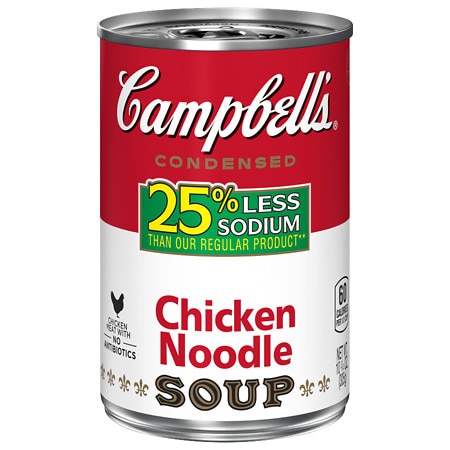
Condensed soup is concentrated: most of the water has been taken out, and you add it back at home. The usual instruction is to stir in one can of water or milk, so a single can becomes about twice its volume. That makes condensed cans some of the cheapest soup per bowl, and it is why classics such as tomato soup and cream of mushroom are also used as a base for casseroles and sauces.
Things to check:
- The serving size. Nutrition figures on a condensed can usually refer to the soup as it comes out of the can, and a can often holds more than one serving.
- What you add. Made with milk, a cream soup is richer and the nutrition changes. Made with water, it is lighter and thinner.
- The use. If you mostly cook with it, the plain flavours (mushroom, chicken, celery) are the most versatile.
Ready to eat cans and jars
Ready to eat soups need nothing but heat. They are thicker and more filling than condensed soup, and the chunky ranges are sold as a full meal with pieces of meat, vegetables, pasta or rice. Jarred soups, such as Italian bean and minestrone styles, work the same way and let you see what is inside.
The trade off is weight and price: you pay to ship and store the water. The canned soups and chicken soup ranges are where most of these sit.
Cartons
Cartons are common for smooth soups such as creamy tomato or butternut squash, and for broths and stocks. They are light, easy to pour and let you use half and keep the rest. Many cooks keep a carton of broth in the cupboard as a base for homemade soup, risotto or gravy.
Once opened, a carton has to go in the fridge, and the pack states how many days it keeps after opening. Write the opening date on the carton so you do not have to guess.
Cups, bowls and noodle soups
Instant cups, microwavable bowls and noodle soups are built for speed: add boiling water or heat for a minute or two and eat from the container. Instant ramen in particular is cheap and filling, and the range runs from mild chicken flavours to very spicy Korean bowls.
They are convenient, but portions are small and the seasoning sachets are often high in salt. Check the sodium figure on the panel and consider using only part of the sachet. Adding an egg, frozen vegetables or leftover chicken turns a cup into a more balanced meal. Look in instant soup and ramen noodles for this format.
Dry soup mixes
Dry soup mixes range from instant powders that you whisk into hot water to bags of dried beans, lentils, grains and seasoning that need a long simmer. They take the least storage space for the number of bowls they make, and a bag of bean soup mix can feed a family.
Read the instructions before you buy, because they vary a lot:
- Time. Instant powders take minutes. Bean mixes may need soaking overnight and an hour or more of simmering.
- Extra ingredients. Many mixes ask you to add meat, a can of tomatoes, milk or butter, so the cost per bowl is more than the bag alone.
- Batch size. Some mixes make eight or more servings. That is good value if you freeze portions, less so if you live alone and do not.
- Dietary needs. Seasoning blends can contain wheat, milk or soy, so check the allergen statement if that matters to you.
Comparing prices fairly
A condensed can, a carton and a bag of dry mix give very different amounts of soup. To compare:
- Work out the number of servings or the volume once prepared, not the weight of the pack.
- Add the cost of anything the instructions tell you to add.
- For multipacks, divide the pack price by the number of cans or cups.
- Compare similar soups: a chunky meal soup and a thin broth are not the same product.
How long soup keeps
According to the USDA Food Safety and Inspection Service, low-acid canned foods, a group that includes soups other than tomato, keep best for 2 to 5 years unopened, while high-acid canned foods such as tomato products keep best for 12 to 18 months. Store cans somewhere cool and dry, and throw away any can that is bulging, leaking, rusted or deeply dented.
After opening, move leftovers into a glass or plastic container and refrigerate them. The same guidance gives 3 to 4 days for low-acid foods and 5 to 7 days for high-acid foods in the fridge. Homemade soup made from a dry mix follows the rules for any cooked leftovers: cool it quickly and refrigerate or freeze it in portions.
Quick checklist
- Decide on effort first: heat only, add water or cook from scratch.
- Check how many servings the pack really holds.
- Count the cost of extra ingredients for condensed soup and dry mixes.
- Look at the sodium figure, especially on cups and noodle bowls.
- Check the allergen statement on mixes and cream soups.
- Note the best by date and the storage advice once opened.
Common questions
Is condensed soup the same as ready to eat soup?
No. Condensed soup is concentrated and needs water or milk added, usually one can. Ready to eat soup is already at serving strength and only needs heating.
Can I freeze leftover canned soup?
Yes, most soups freeze well, although cream soups and soups with potato or pasta can change texture after thawing. Freeze in a freezer container, not in the opened can.
Are dry soup mixes cheaper than canned soup?
Often per bowl, especially bean and lentil mixes that make large batches. Include any extra ingredients the recipe needs and compare the number of servings, not the price of the bag.