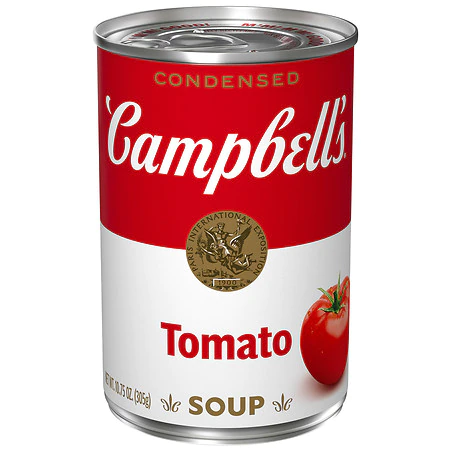
The most useful part of a soup label is not the front of the can but the Nutrition Facts panel on the back. Check three numbers first: the serving size, the servings per container and the sodium with its percent Daily Value. Those tell you what you will actually eat if you finish the can or bowl.
Claims on the front, such as “reduced sodium” or “light”, have legal definitions in the US, but they compare the soup with something else, usually the brand’s regular version. A reduced sodium soup can still be high in sodium. The panel gives you the real figure.
This guide explains how to read each part of the label and how to compare two soups side by side. For choosing between cans, cartons, cups and dry mixes, see the guide to choosing ready-made soup.
Start with serving size
Every figure on the Nutrition Facts panel refers to one serving, and many soup containers hold more than one. A large can or a carton often lists two or more servings, so if you eat the whole thing you need to multiply every number on the panel.
Condensed soup adds another step. The figures usually describe the soup as it comes out of the can, before you add water or milk. Adding water does not change the sodium in the bowl, while adding milk adds calories, fat and protein.
Some larger packs now show two columns, one per serving and one for the whole container. When you see this, use the column that matches how you eat.
Sodium and percent Daily Value
The Daily Value for sodium on US labels is 2,300 mg, which matches the Dietary Guidelines advice to keep intake below 2,300 mg a day for adults. The percent Daily Value (%DV) shows how much of that one serving provides.
The FDA gives a simple rule for reading %DV:
- 5% DV or less per serving is low.
- 20% DV or more per serving is high.
Many ready-made soups land well above 20% DV per serving, and a whole can of some soups can provide a large share of a day’s sodium. That does not mean you have to avoid soup, but it is worth comparing. If you have been told to limit salt for a medical reason, ask your doctor or a dietitian how soup fits into your day.
What the sodium claims mean
US rules define the sodium words used on packaging. The figures are per serving:
| Claim on the pack | What it means |
|---|---|
| Sodium free or salt free | Less than 5 mg sodium |
| Very low sodium | 35 mg or less |
| Low sodium | 140 mg or less |
| Reduced sodium or less sodium | At least 25% less than the regular product |
| Light in sodium | At least 50% less than the regular product |
| No salt added | No salt added during processing, but the ingredients can still contain sodium |
Most soups that carry a claim use the comparative ones. A can of chicken noodle soup labelled 25% less sodium has a quarter less than the brand’s standard version, which may still be a lot. Truly low sodium soups, at 140 mg or less per serving, are much rarer and often taste noticeably less salty. Some cooks buy them and season to taste at the table.
Range names are a different thing. Names such as “Healthy Request” or “Heart Healthy” are brand ranges. Some are linked to official criteria, but the name itself does not tell you the sodium figure, so read the panel.
“Light” is not always about salt
On its own, “light” or “lite” usually refers to calories or fat: under US rules it means at least one third fewer calories or at least 50% less fat than the regular product. A light soup can therefore be lower in calories without being lower in sodium. Only the words “light in sodium” refer to salt. Soups in the healthy range often carry several claims at once, so read which nutrient each one is about.
Ingredients and allergens
The ingredient list runs from the largest amount to the smallest. If cream, butter or cheese appears near the top, expect a richer soup. Words such as yeast extract, hydrolyzed protein and soy sauce add flavour and often sodium too.
US law requires the major food allergens to be declared: milk, eggs, fish, shellfish, tree nuts, peanuts, wheat, soybeans and sesame. Soups frequently contain milk, wheat (in noodles, pasta and thickeners), soy and shellfish in chowders and seafood soups. Look for a “Contains” statement or for the allergen named in the ingredient list.
If you avoid gluten, a “gluten-free” label in the US means the food contains less than 20 parts per million of gluten. Noodle soups, barley soups and many cream soups thickened with flour are not gluten-free. The gluten-free soups range is a starting point, but check the label of each product.
Organic and other claims
The USDA organic seal means at least 95% of the ingredients are organic. “Made with organic” ingredients means at least 70%. Organic is about how ingredients were produced, not about salt or calories, so an organic soup still needs the same label check as any other.
Claims such as “homestyle”, “natural” or “hearty” describe style and do not have a precise nutritional meaning. Use them to judge taste, not nutrition.
How to compare two soups side by side
- Find the serving size on both and note how many servings each container holds.
- Compare sodium per serving, then per container if you usually eat it all.
- Check calories, protein and fibre if you want the soup to be a full meal.
- Read the allergen statement and the first few ingredients.
- Compare the price per serving, not per can.
A chunky soup with more protein and fibre may be more filling than a cheaper soup with the same sodium. A tomato soup made with water will be lighter than the same soup made with milk.
Quick checklist
- Serving size and servings per container first.
- Sodium in mg and %DV: 5% is low, 20% is high.
- Reduced and light in sodium are comparisons, not low sodium.
- “Light” alone usually means fewer calories or less fat.
- Allergens: milk, wheat, soy and shellfish are common in soup.
- Gluten-free means under 20 ppm in the US.
- Organic is about ingredients, not nutrition.
Common questions
Is low sodium the same as reduced sodium?
No. Low sodium means 140 mg or less per serving. Reduced sodium means at least 25% less than the regular version, which can still be well above 140 mg.
Does adding water to condensed soup reduce the salt?
It makes the soup less salty per spoonful, but the bowl contains the same amount of sodium. The total only changes if you eat less of the soup.
Is broth lower in sodium than soup?
Not necessarily. Many broths and stocks are high in sodium. Look for low sodium or unsalted versions if you use broth as a cooking base and want to control the salt yourself.